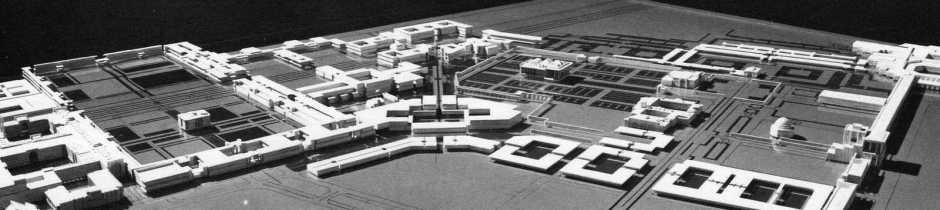


Integrated Program "Pignataro" in Mattinata (FG), 2012
The structure of the intervention consists of all the elements that characterize a traditional neighborhood, but at the same time modern
- One neighborhood unit, with a clear distinction between the viability of the neighborhood, the service roads to residences and bicycle and pedestrian paths.
- A network of roads reduced to the essential and efficient;
- A building, a real Door of the new neighborhood, to be allocated to the public service, connects it formally to the existing one;
- A Center (Piazza), part of a more complex system of green spaces, exclusively devoted to pedestrian travel;
- The presence of urban Nodes that relate the settlement to the pre-existing territorial and cultural landscape, as well as to facilitate the use and protection;
Ecological intervention
The project was created with the intention of making a complex energy-efficient, low environmental impact and zero CO2 emissions.
The goal is to achieve ecological housing at low cost, a measure of desire, low-impact, three assumptions: the first economic, the second of a social nature, and the third type of energy, the potential flexibility of the proposed housing system also allows different ways of living, while using every passive and active strategy to make the building a bioclimatic machine.
The design choices include the integration of optimal orientation definition, shape, housing characteristics, passive and active strategies.
There are a number of blocks of buildings where private spaces are provided out of the outline of the building, allowing the shielding necessary to sunlight on the south side of the settlement; a housing system to zero emissions of CO2, thanks to plant architecturally integrated photovoltaic, the use of surface-enhancing solar energy for the winter months, internal air circulation for the summer, and all the passive strategies adopted in order to make the building a bioclimatic system (including an innovative concrete with low thermal conductivity ).
The fully integrated photovoltaics on the roof, provides coverage of total energy consumption of the building and feeding the plant to the geothermal heat pump. Particular attention is paid to the management of water resources, it is provided for the recovery of rainwater and in some cases the system of constructed wetlands.
The search for innovative structural solutions, in some cases prefabricated, optimize the cost of construction, the manufacturing time and the level of safety on the construction site.
Areas and public facilities
Close to the town is the location of a Public Building like a Door of the neighborhood, and a square with more cores, with the creation of paths, benches, street furniture and anything else necessary to ensure the qualification of the field and of the entrance to the neighborhood.
Within the green belt boundary is expected to locate an area for leisure and sport, with a football field; the whole area of green public will be equipped with automatic irrigation system and lighting.
Areas and private facilities for public use
On the ground floor of a residential block there is a kindergarten, as a space closely linked to the residences and for public use only, open to green spaces facing seamlessly the residential blocks. Other blocks are equipped with spaces closely related to residences, for business, professional studios and offices, as well as for collective activities,. mainly located in the central spine.
Land area: sqm. 150,106
Total Volume: mc. 127,590
With the arch. G. Buccarella and arch. A. D’Ardes

Program of Public Initiative for Emergency Housing in Foggia, 2009
The proposed program aims to combine the demand for social housing to address the housing crisis with interventions of urban redesign and to increase the quality of living in the suburbs, where the city is measured in physical terms and landscape with open land, in an osmosis subsidiary of the constituent elements of both worlds.
The architectural proposal is structured according to a continuum built fairly uniform which is the natural end of the city, in the form of inhabited walls, behind which the ancient urban gardens become public green space directly accessible from the living units and in continuity with the agricultural landscape borders.
In this border area bursts, as a memory of the treed tracks that ran along the tratturi, the sign on a regional scale of the tree-lined path connecting the nearby cattle track.
Sup Terr She 3:02:07; Cub. max. mc. 45,310
With the arch. G. Buccarella, Arch. L. Rutica and Eng. G. Torraco


Isfahan (Iran), 1977-1979
As a designer he was part of a group of architects from different countries under the supervision of Prof. Arch. Ludovico Quaroni engaged in the Master Plan of the Historical Center of Isfahan (Iran) under the auspices of the Iranian Culture Ministry.
This plan provided for the drafting of architectural requirements to be followed in the design and rehabilitation of existing parts, and the new measures provided for the interstitial areas and those released after demolishing buildings deemed inconsistent with the historic fabric.
To this end have been prepared outline plans for new gardens, halls, homes and office buildings.


 Stampa